Morocco ranks among the safer North African destinations for international travellers, with tourism forming a significant part of the economy and a visible police presence in tourist areas. That doesn't remove the need for the same common-sense precautions you'd take in any major tourist destination.
Violent crime against tourists remains rare
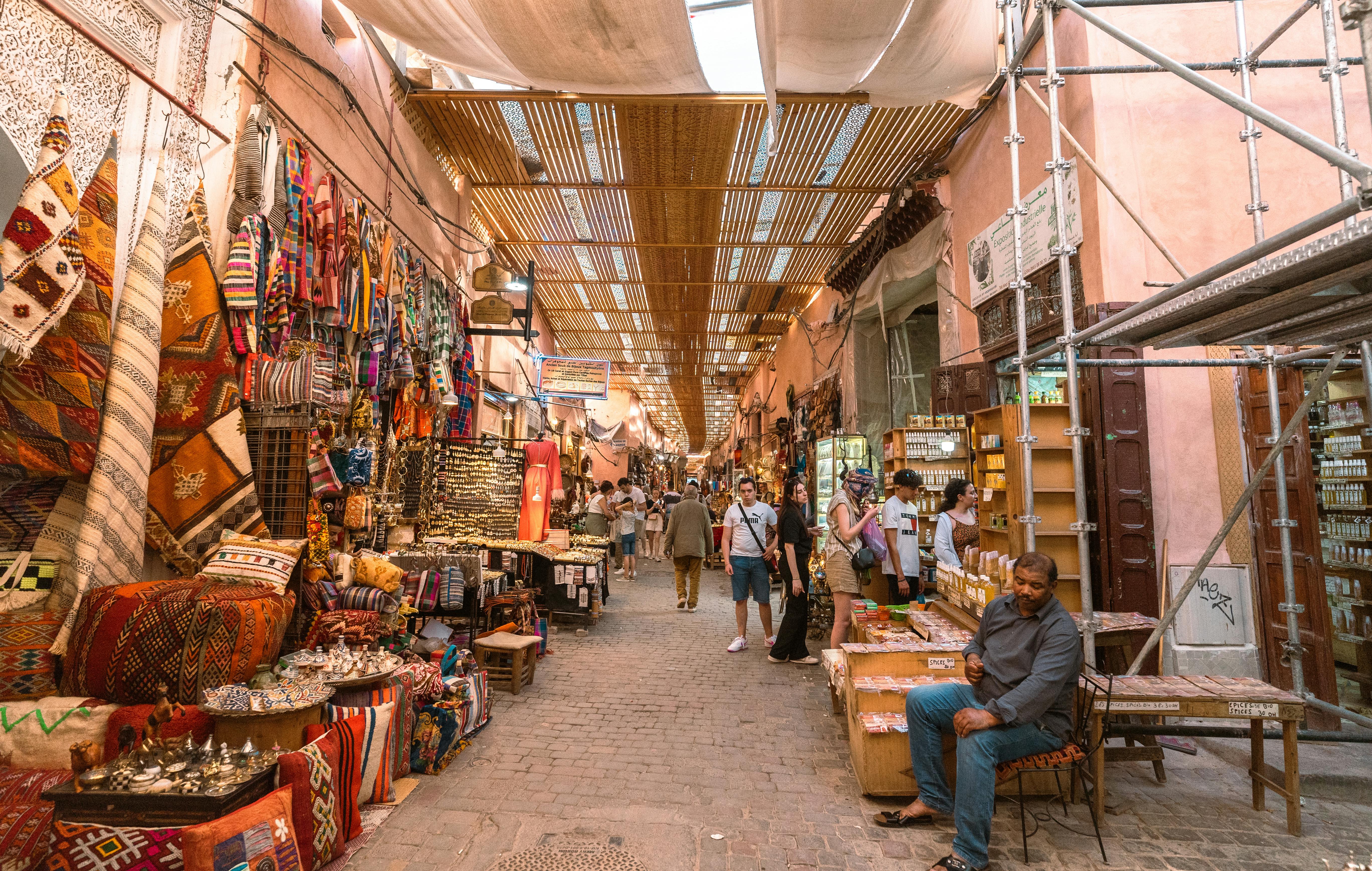
Violent theft specifically targeting travellers is uncommon, particularly in tourist-frequented areas (the medinas of Marrakech, Fès, Chefchaouen, beach resorts). The most common incidents relate more to pickpocketing in dense crowds (souks, public transport) than direct confrontation.
The most common scams, and how to avoid them
- Fake guides: people offer themselves as guides in the medina and later demand payment, sometimes insistently. A firm, polite "no thank you," repeated if needed, is usually enough — avoid accepting unsolicited help "finding your way."
- Taxi overcharging: always ask for the meter ("le compteur, s'il vous plaît") or agree on a price before getting in, never after the ride.
- Fake "closed" monuments: you're told a site is "closed for renovation" or "closed today" to redirect you to a shop — always check for yourself before turning back.
- Overpriced "gold" or "handmade" goods: compare prices across several shops before a big purchase, and be wary of overly pushy sales enthusiasm.
Road safety: the real thing to watch
The main statistical risk for travellers in Morocco isn't crime, but road traffic — sometimes unpredictable driving, winding mountain roads, limited night lighting outside major cities. If you rent a car, stay cautious at night and on Atlas mountain roads, and avoid driving if you're not comfortable with dense, less rule-bound traffic than in Europe.

For solo female travellers
Many solo female travellers cross Morocco every year without major incident. Street attention (comments, staring) is more common than in some European countries, particularly in heavily touristy areas — clothing covering shoulders and knees, along with a confident manner, generally reduces this. Avoiding walking alone late at night in quiet alleys remains sensible, as it would in any country.
Health and useful numbers
- Water: stick to sealed bottled water rather than tap water to avoid traveller's stomach troubles.
- Travel insurance: check that it covers medical costs and repatriation — the best private clinics in major cities offer good-quality care, but it comes at a cost.
- Emergencies: 19 (police), 15 (SAMU/medical emergencies) nationwide.
The best protection is the same everywhere in the world: stay aware of your surroundings, keep valuables discreet, and trust your instinct if a situation feels off.
If something goes wrong during your stay
Your host is often the best local resource if you're unsure about something — don't hesitate to ask for advice about a neighbourhood, a price, or a situation that feels ambiguous. Also check our Trust & Safety page for best practices specific to booking on MoroBnB.
Ready to go?
Find an authentic home in Morocco, booked directly with the host, no commission.
Browse homes