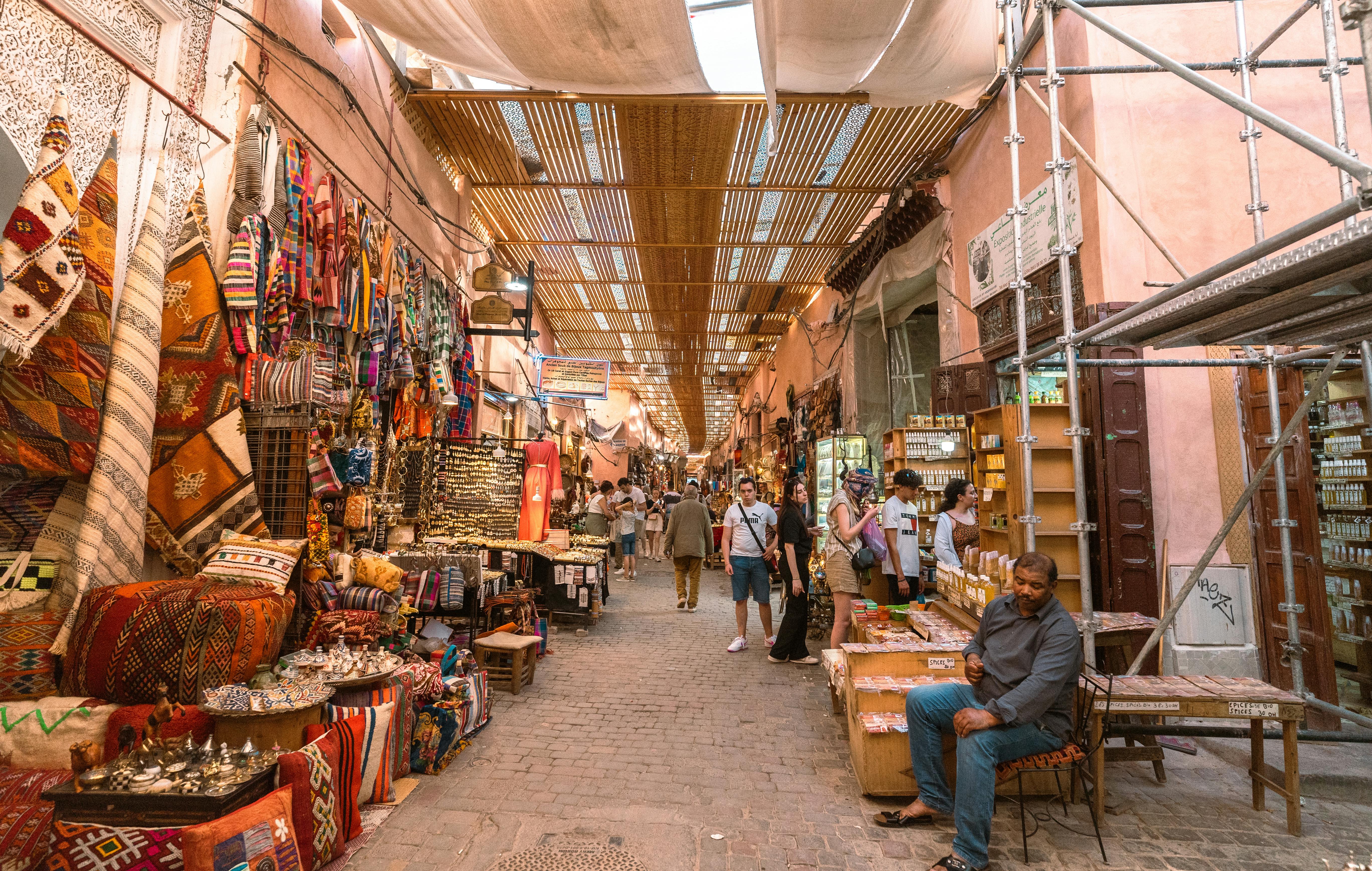
Moroccan hospitality is famous the world over — and part of earning it comes from understanding a few simple codes. None of it is complicated, and most of it comes down to common sense and a bit of attentiveness, but knowing it in advance avoids awkward moments and opens quite a few doors.
Dress code
Morocco is a moderate Muslim country well used to tourism, but respectful clothing is still appreciated, especially outside beach resorts and large hotels. For both women and men, covering shoulders and knees in the medina, souks and religious sites avoids unwanted attention and makes interactions easier. On beaches and in resort towns (Agadir, Essaouira), standard Western beachwear is perfectly fine.
Bargaining: a social game, not a confrontation
In the souks, listed prices (when there are any) are rarely the expected final price. Bargaining is part of the buying experience — but in a friendly, almost playful spirit, not a confrontational one. A smile, a bit of time and patience go further than an aggressive negotiation. In fixed-price shops, supermarkets or metered taxis, on the other hand, bargaining doesn't apply.
Hospitality and tea
Being invited for tea — by a shopkeeper, a host, a family met along the way — is a genuine gesture of hospitality, not a disguised sales tactic (even if some vendors also use it as a commercial opener, with no obligation to buy). Accepting, even briefly, is generally well received and often leads to genuine exchanges you wouldn't have from a distance.

Religion and Ramadan
Islam shapes daily Moroccan life — five daily calls to prayer, mosques generally closed to non-Muslims (with the notable exception of the Hassan II Mosque in Casablanca). If your trip falls during Ramadan, know that many restaurants adjust their hours (closed during the day, open after sundown iftar) — eat and drink discreetly in public out of respect, even if you're not observing the fast. It's also a magical time to see cities come alive after dark, once the streets fill up post-iftar.
Greeting and interacting
A "Salam" (hello) or "Salam alaikum" said when entering a shop, even clumsily, is always appreciated. The right hand is traditionally used for eating, greeting, or giving/receiving objects — a cultural detail inherited from broader customs across the Arab-Muslim world.
The best advice remains the simplest: observe before acting, and never hesitate to politely ask whether a behaviour fits the context. Moroccans are generally very forgiving and happy to explain their culture to curious visitors.
Photographing people
As everywhere, asking permission before photographing someone — especially elderly women, people in traditional dress, or private moments — is basic respect. Some, particularly on Jemaa el-Fna square (storytellers, musicians, snake charmers), expect a small coin in exchange for a photo — good to know before raising your camera.
Ready to put it all into practice? Browse our city guides to prepare every leg of your trip to Morocco.
Ready to go?
Find an authentic home in Morocco, booked directly with the host, no commission.
Browse homes