Moroccan cuisine is one of the richest in North Africa, shaped by Berber, Arab, Andalusian and Mediterranean traditions. Knowing a few classics and rituals before you go lets you eat far better than a tourist-menu version — here's the essentials.
Tajine: much more than a single dish
The word refers both to the conical clay pot and to whatever recipe simmers inside it. Contrary to popular belief, there's no single "tajine" but dozens of variations: chicken with olives and preserved lemon, kefta (meatballs) with tomato and egg, lamb with prunes and almonds (a sweet-savoury mix typical of special occasions), or vegetable tajine for lighter meals. The slow, gentle steam-cooking is what makes the meat so tender.
Friday couscous
Traditionally served on Fridays, the day of communal prayer, Moroccan couscous stands apart from its Algerian or Tunisian cousins with a finer, steamed semolina, often paired with seven vegetables and sometimes a slightly sweet broth with raisins and caramelised onions (couscous tfaya). In families, it's the meal that brings the most people together around one shared dish.

Pastilla, sweet meets savoury
A speciality from Fès that became a national icon, pastilla is a flaky pie traditionally filled with pigeon (today often replaced by chicken), almonds, cinnamon and powdered sugar dusted on top — a jarring sweet-savoury combination at first, addictive after.
The mint tea ritual
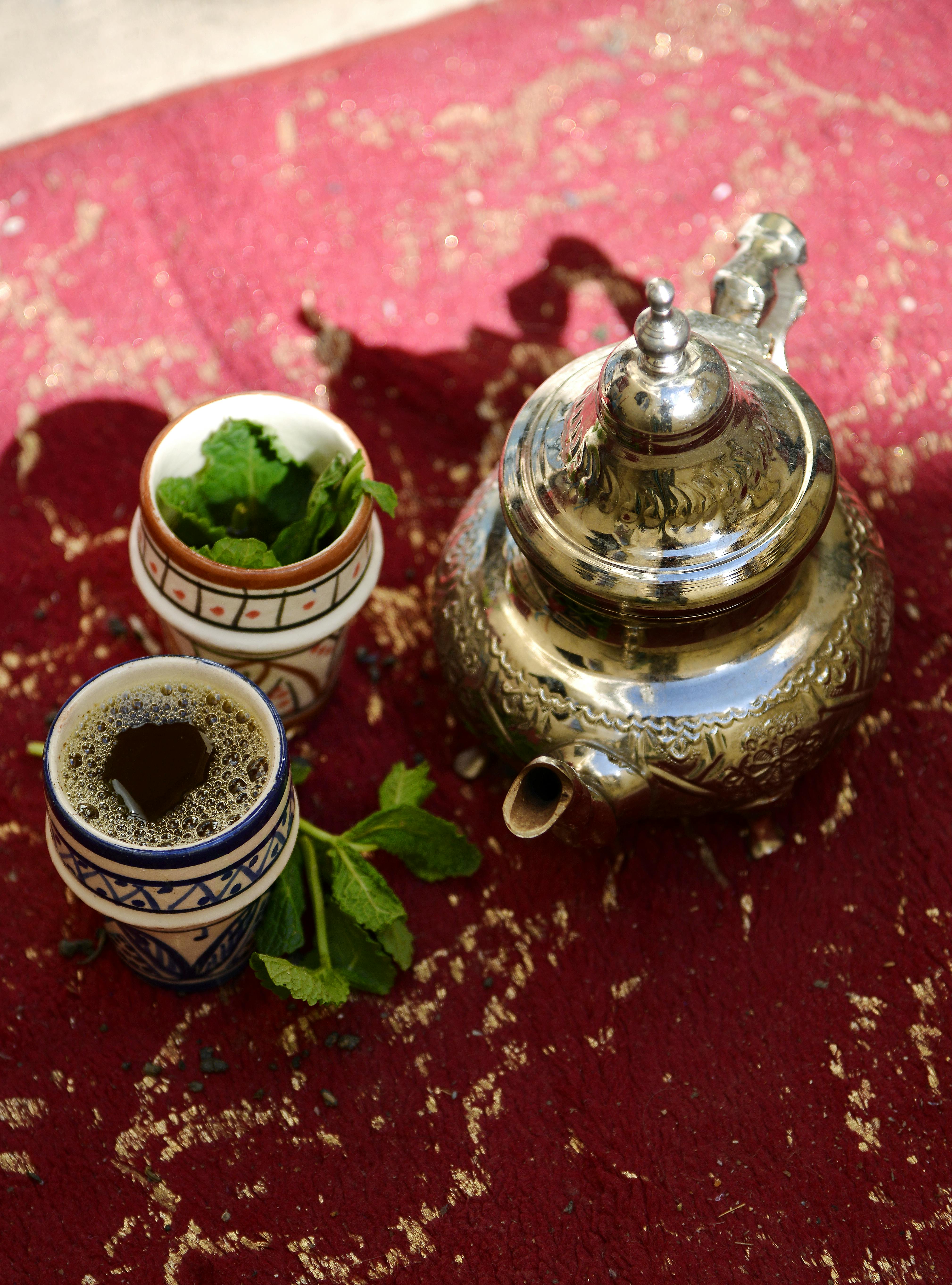
More than a drink, mint tea (green tea, fresh mint, generous sugar) is a social ritual: poured from height to create foam, often served across three successive glasses — a local saying goes that the first glass is "as gentle as life," the second "as strong as love," the third "as bitter as death." Accepting a tea offered by a shopkeeper or host is a basic courtesy — declining can come across as a little cold, even though it's never a strict obligation.
Practical tip: if you're invited into a Moroccan home, bringing pastries (gazelle horns, chebakia) is always a welcome gesture, without being required.
Street food not to miss
- Msemen and baghrir: Moroccan pancakes — msemen, flaky and square, baghrir with a thousand tiny holes, served at breakfast with honey and melted butter.
- Sfenj: fried doughnuts sold in the street early in the morning, best eaten warm, plain or dipped in sugar.
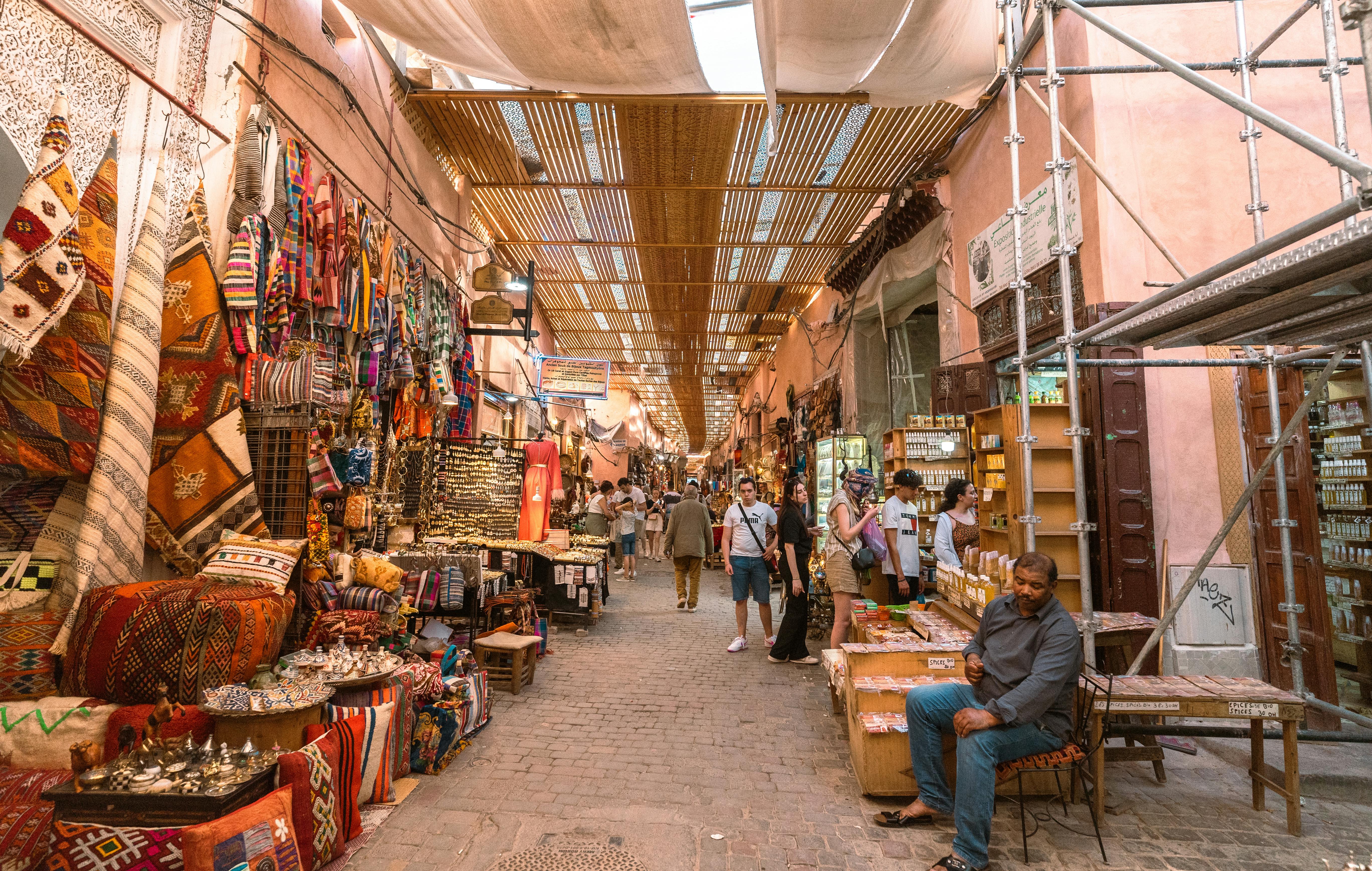
- Skewers and merguez: grilled on the spot in the souks and on Jemaa el-Fna square in Marrakech in the evening.
- Harira: a hearty tomato, lentil and chickpea soup, traditionally used to break the Ramadan fast but eaten year-round.
Eating and drinking safely
Favour busy stalls (fast turnover means freshness), drink sealed bottled water, and don't hesitate to ask your host for their trusted addresses — often the best source of information, away from the tourist traps in the busiest central areas.
Ready to taste it all in person? Explore our city guides to know where to look for the best tables at each destination.
Ready to go?
Find an authentic home in Morocco, booked directly with the host, no commission.
Browse homes